Select a dependable Stillwater arborist who verifies ISA/TRAQ credentials, current general liability and workers' comp, and proven ANSI Z133/A300 compliance. Expect written job hazard analyses, PPE and equipment inspection logs, and site-specific traffic/drop-zone controls. Services must encompass objective pruning, controlled removals with rigging plans, targeted cabling, and ISA-based pest diagnostics with calibrated thresholds. Request seasonal maintenance programs, post-service reporting, and round-the-clock emergency response with utility coordination. You'll discover how to minimize risk, protect assets, and maximize tree longevity below.
Important Highlights
- TRAQ-qualified and ISA-certified tree experts delivering comprehensive insurance protection and adhering to ANSI Z133/A300 standards for safe, standard-compliant operations in Stillwater.
- Professional pruning services utilizing branch collar cuts, comprehensive rigging strategies, and designated drop zones to ensure the safety of buildings and infrastructure.
- Proactive care plans: periodic comprehensive checks, soil analysis and testing, pest surveillance and monitoring, and targeted nutrient applications to maximize tree wellness and lifespan and lower long-term care expenses.
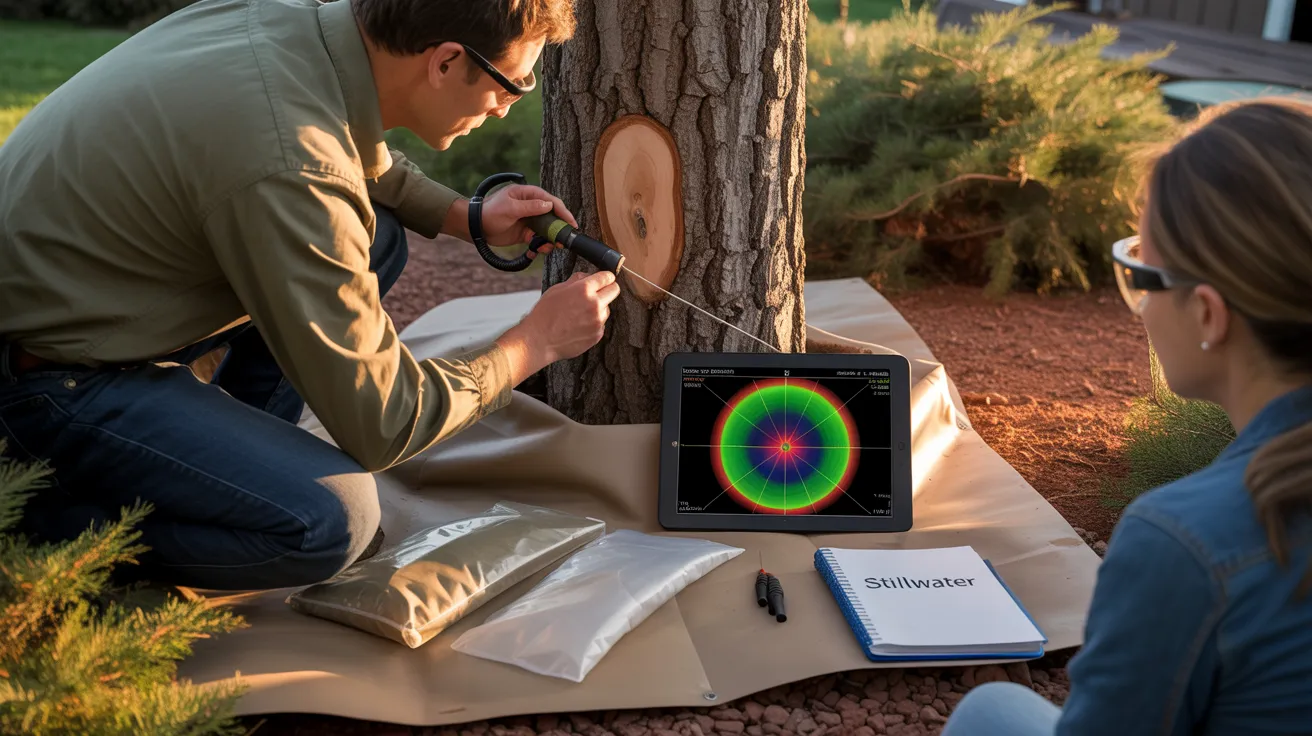
- Evidence-based treatment approach: incorporating lab testing, specialized equipment where necessary; complete documentation provided with photographs, GPS locations, and thorough service summaries.
- immediate emergency assistance with specific response times, utility-aware cleanups, stabilization techniques, and transparent updates throughout.
Exploring Safety Standards, Certification, and Insurance
Although tree work can seem routine from the ground, choosing an arborist with valid certification, insurance, and verified safety standards helps safeguard your property, potential liabilities, and the crew's wellbeing. Make sure to check professional certifications, active general liability, and workers' compensation before any site mobilization. Certified arborists follow industry standards such as ANSI Z133 for safety and ANSI A300 for tree care, which lower risk occurrence and prevent avoidable damage. Request written job hazard analyses, PPE requirements, and verification of equipment inspection logs. Confirm chainsaw, aerial lift, and rigging competencies, along with documented emergency response plans. Insist on site-specific traffic and drop-zone controls. When you vet these elements, you minimize dangers, guarantee code-compliant operations, and maintain trees and structures with proven dependability.
Expert Tree Services: Pruning, Removal, and Structural Support Tailored to Your Property
With certified, insured crews utilize ANSI-compliant protocols to deliver exceptional arboricultural solutions, including structural support, pruning, and tree removal tailored to your particular site and species. We execute precise pruning to meet specific objectives: proper clearance, structural strength, and hazard reduction, implementing crown thinning techniques that minimize wind load without lion-tailing, while preserving appropriate live crown ratio and correct branch collar cuts. Our removal operations are carefully staged with detailed rigging plans, suitable friction devices, and marked drop zones to eliminate shock loads and safeguard nearby utilities, pavement, and structural foundations. Each project includes complete pre-job hazard evaluations and meticulous post-job cleanup.
When dealing with weak unions, long lever arms, or co-dominant stems, we implement selective bracing and dynamic cabling to redistribute loads while maintaining natural movement. Components are selected based on species and span; anchors are set to manufacturer torque requirements, checked on schedule, and logged for lifetime monitoring.
Early Detection of Diseases and Pests: Preventing Serious Damage
As timely identification safeguards the tree canopy, your budget, and overall safety, we implement regular inspections with professional diagnostic equipment to identify problems before they become serious. You benefit from early identification through regular canopy inspection, trunk sounding, and root system assessment to spot stress indicators before obvious damage appears. We confirm our field observations with scientific testing for diseases, nutrient imbalances, and ground condition concerns, ensuring our treatments align with diagnostic evidence.
We implement specialized traps and strategic surveillance to identify wood-boring insects and beetles at initial infestation levels, then time treatments to break their life cycles. You'll notice how carefully calculated thresholds direct our actions-incorporating sanitation pruning, soil improvements, biological control methods, or labeled treatments-implemented with protective gear and drift reduction. We record measurements, map affected zones, and perform post-treatment checks, enabling you to lower risk, protect assets, and promote tree longevity.
Emergency Preparedness and Storm Response for Stillwater Properties
You should arrange tree evaluations before storms to detect potential hazards, unstable roots, and uneven crown distribution adhering to ISA standards. According to the evaluation, we'll implement risk mitigation pruning to minimize wind resistance, eliminate unstable limbs, and protect potential impact areas. If storms arrive, you can count on our 24/7 emergency response for rapid hazard abatement, secure tree extraction, and power line conscious cleanups.
Pre-Storm Tree Evaluations
Ahead of severe storms targeting Stillwater, a detailed pre-weather tree inspection detects structural weaknesses and potential hazards that could lead to problems under storm conditions including wind, rain, and ice. Our team performs thorough limb inspections to detect structural defects, weak unions, deadwood, and extended limbs. We assess tree canopy equilibrium, load distribution, and distance from structures and utilities. When examining the stem, we check for decay, conks, seams, pruning wounds, and hollows. When checking root health, we examine girdling roots, buttress decay, soil heave, and shallow rooting, using specialized equipment when necessary.
We assess and log individual species wind vulnerability and evaluate current damage and soil saturation concerns. We provide comprehensive results with photos, condition ratings and practical timeframes, plus immediate safety recommendations for stability improvements covering cabling, bracing, and interim support and grounds management protocols.
Risk Mitigation Pruning
Results of the pre-assessment directly guide preventive pruning measures: precise pruning that minimize wind resistance, balance load distribution, and eliminate vulnerable branches prior to storm conditions. You'll prioritize structural pruning that follows ANSI A300 standards and species-specific characteristics. Apply targeted thinning to reduce crown density 10-20%, retaining interior foliage to maintain damping effects and prevent over-thinning. Execute canopy reduction only where terminal weight and leverage produce unsafe loads; make reduction cuts to laterals with minimum one-third diameter of the removed section.
We'll eliminate dead, cracked, and rubbing branches, reduce lengthy leader branches, and clear poorly connected competing stems with properly placed reduction or subordination cuts. Maintain safe distances from buildings, lights, and utility lines while preserving branch collars. Finish with clean cuts, disinfected tools, and debris removal.
Round-the-Clock Emergency Services
As storms approach Stillwater, implement a clear emergency tree management strategy that focuses on life safety, utilities, and scene stabilization. Set up control, identify hazards, and cordon off energized lines before moving forward. Follow ANSI Z133 protocols: don PPE, maintain exclusion zones, and log all conditions. Assess trees by failure potential, impact significance, and approach routes. For immediate stabilization, utilize cribbing, straps, and guying to minimize movement and avoid secondary strikes. Communicate with utility dispatch before making any cuts near electrical lines.
Initiate quick removal after you have secured loads and escape paths. Use step-cuts, relief kerfs, and mechanical advantage to manage binding and torsional forces. Place tarps and erosion prevention measures to protect the soil. Following completion, assess canopies, root zones, and soil status, then arrange follow-up pruning and observation.
Proactive Maintenance Plans That Save Money Over Time
Establish a systematic tree maintenance plan that targets risk reduction and long-term cost control. You can lower incidents by pairing regular assessments with data-driven pruning cycles, soil analysis, and precise fertilization programs. Studies demonstrate strategic crown reduction decreases the likelihood of wind damage, while measured clearance management decreases conflicts with utilities and legal risks.
Establish a written timeline for: spring risk assessments, summer insect surveillance, fall structural pruning, and winter tree care. Connect each task to quantifiable parameters like tree size, structural issues, and pest presence to address high-risk trees. Include budget planning to distribute costs predictably and avoid emergency expenses. Schedule routine mulch evaluations, irrigation checks, and root collar inspections to avoid root damage and decline. Record findings, images, and location data. Eventually, you'll observe reduced tree loss, safer properties, and reduced care costs.
Finding the Ideal Local Arborist for Sustained Tree Health
While pricing is a factor, it's crucial to vet a local arborist based on their credentials, safety systems, and diagnostic abilities that preserve trees and people over the long term. Request ISA certification, TRAQ credentials, and proof of ANSI Z133 compliance. Confirm their written job hazard analyses, PPE standards, and thorough rigging plans for complex removals. Demand soil testing, resistograph or sonic tomography when decay's suspected, and targeted recommendations.
Emphasize local expertise and community standing through testimonials, case studies, and references. Verify liability coverage and incident tracking. Evaluate individual consultations with quantifiable objectives, photo documentation, and service timeframes. Require clear project scopes, local flora understanding, and strategic planting advice. Compare extended warranties linked to maintenance plan compliance. Request straightforward communication methods, comprehensive post-work reports, and emergency response procedures with specific timeframes.
FAQ
How Do Arborists Minimize Noise and Disruption During Visits
Tree care professionals reduce disturbances by arranging work during optimal hours for reduced noise impact. Workers alert nearby homes and coordinate optimal entry points to maintain smooth workflow. Gear is selected emphasizing environmentally conscious choices: cordless cutting tools, telescoping tree trimmers, and manual equipment where feasible. Workers keep equipment for peak efficiency by pre-sharpening chains, minimizing idle time, and chipping off-site when permitted. They implement precautionary steps like soil protection systems, trained watchpersons, and effective team coordination to guarantee security while providing prompt solutions.
What Eco-Friendly Treatments Can You Use for Tree Care?
You have multiple environmentally friendly tree care options. Use bio-based nutrients containing slow-release nitrogen to enhance soil biology and reduce runoff. Introduce beneficial insects, such as lady beetles and lacewings, for focused pest suppression. Implement horticultural oils and insecticidal soaps carefully to reduce non-target impacts. Think about trunk injections of low-toxicity actives to concentrate treatment. Apply mulch, compost teas, and biochar to promote root health. Always calibrate equipment, follow labels, and track outcomes to maintain safety and efficacy.
Do You Assist With Tree Boundary Disputes?
Yes. Consider a property line sketch depicting the surveyed boundary, tree locations, canopy extent, and root systems. click here You get boundary mediation adhering to statutes and arboricultural standards (ISA BMPs). I coordinate a licensed surveyor for map encroachments, document species, and assess conditions. I provide comprehensive assessments, propose mitigation measures like pruning or root barriers, and assess appraised value for damage claims. I prioritize security, detailed records, and community relations to reduce liability and resolve disputes.
How Are Project Quotes Calculated and Itemized?
We provide estimates according to a thorough site assessment, safety evaluation, and work specifications. We analyze tree count, size, access constraints, machinery needs, and waste management. The workforce calculation factors in professional team time, aerial work and lifting equipment, and safety protocols in accordance with ANSI Z133. Materials, permits, traffic control, and disposal are itemized separately. Travel charges, equipment deployment, and stump grinding have separate line items. We factor in provisions for natural factors. You'll find detailed unit rates, full expenses, and timing expectations.
Do You Offer Guidance on Selecting New Tree Species to Plant?
Yes, you'll receive comprehensive support with detailed care. You'll receive plant selections customized for your goals after location assessment, soil analysis, and climate zone assessment. We'll evaluate water flow, soil chemistry, ground conditions, hardiness zone, disease risks, and service line considerations to reduce potential problems. I'll emphasize strong structural integrity, drought and disease resistance, and proper location selection to protect infrastructure. We'll provide planting instructions, positioning requirements, root establishment protocols, and maintenance schedules to ensure optimal growth and prevent problems.
Conclusion
You need trees that prosper, not simply endure. With a qualified, insured arborist, you get ANSI-compliant pruning and careful tree extraction, with precise support systems using structural analysis-not guesswork. Proactive inspections detect pests and diseases before they escalate. Storm-hardening trims minimizes wind resistance and decreases strike hazards; rapid deployment quickly clears pathways. A preventive care program reduces long-term expenses. Choose a Stillwater expert who maintains detailed reports, verifies PPE, and maintains specimen tracking-because in this data age, protection and documentation matter.